Exercise for Parkinson’s Disease: Moving with Purpose at Village on the Green
As research continues to evolve, exercise for Parkinson’s disease is increasingly recognized as one of the most important tools for maintaining function and quality of life. While medication plays a central role in managing symptoms, regular movement and structured physical activity can support Parkinson’s movement and mobility in ways medication alone cannot. For many older adults, the question is not whether exercise helps, but what kinds of activity are safe, realistic, and sustainable.
Village on the Green is a Life Care community in Longwood, FL, near Orlando, that encourages physical activity through fitness programs, walking paths, and access to higher levels of care on campus. For families seeking Parkinson’s support in Longwood, FL, this combination of wellness-focused amenities and senior living options can help make movement part of daily life.
Why Physical Activity Matters for Parkinson’s
Parkinson’s disease affects movement control, often causing slowness, stiffness, and changes in balance. Over time, inactivity can worsen these symptoms, leading to more weakness, a greater fall risk, and difficulty with daily tasks. Exercise cannot cure Parkinson’s, but it can:
- Help maintain strength, flexibility, and endurance
- Support better balance and coordination
- Improve gait (how someone walks) and reduce shuffling
- Boost mood and energy levels
- Support overall cardiovascular health
In some cases, regular physical activity may also help people feel more in control of their symptoms, which can be empowering.
Types of Exercise That Can Help with Parkinson’s
The best exercises for Parkinson’s are often those that:
- Emphasize large, purposeful movements
- Challenge balance in safe, supervised ways
- Support strength in the legs, core, and posture
- Incorporate stretching to counteract stiffness
Examples may include:
- Walking, especially with attention to stride length and arm swing
- Balance and stability exercises
- Strength training with light weights or resistance bands
- Stretching or flexibility routines
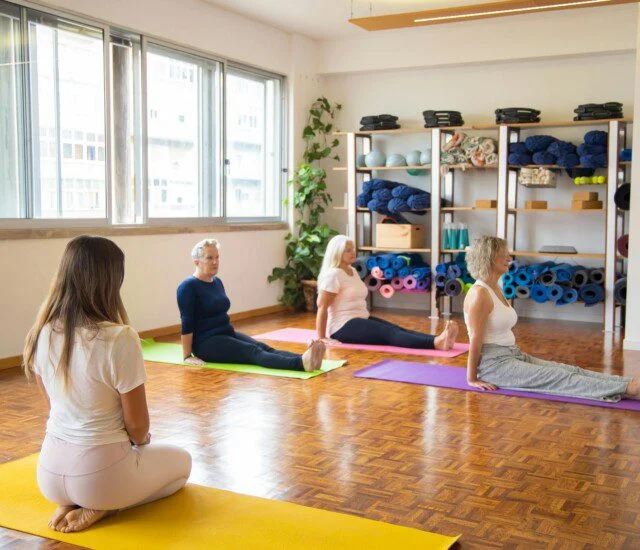
- Gentle group classes designed for older adults
Before starting any new exercise program, it is important for someone with Parkinson’s to consult a health care provider or therapist to ensure the activities are safe and appropriate for their current abilities.
How Senior Living Settings Support Exercise for Parkinson’s
Participating in regular physical activity can be easier in a senior living environment that is built around wellness. In a community like Village on the Green:
- Fitness centers and group classes are designed with older adults in mind
- Walking paths, common areas, and outdoor spaces encourage safe, everyday movement
- Staff can help residents find activities that match their interests and capabilities
- We reduce transportation and scheduling barriers that can hinder participation in community-based programs
This environment can be especially helpful for people with Parkinson’s who may need encouragement, reminders, or adjustments to routines to keep moving consistently.
Exercise and Movement at Village on the Green
Village on the Green offers a range of amenities and programs that can support exercise for Parkinson’s disease, including:
- Fitness facilities and group classes appropriate for older adults
- Walking paths and landscaped grounds that encourage safe outdoor movement
- Social and recreational activities that help residents stay engaged and active
For residents whose Parkinson’s symptoms progress, the availability of assisted living, skilled nursing, and rehabilitation services on campus means that exercise and mobility support can be adapted to changing needs.
Balancing Safety and Challenge
For someone living with Parkinson’s, the right exercise program balances safety with enough challenge to be beneficial. This may mean:
- Starting slowly and gradually increasing intensity or duration
- Using assistive devices (such as canes or walkers) as recommended by a therapist or physician
- Exercising in supervised settings, especially when balance is a concern
- Listening to the body and avoiding overexertion
In a senior living community, staff and therapists can help tailor activities and monitor residents' responses, adjusting plans as needed.
When Families in the Longwood Area Might Look for Support
Families may want to consider a community like Village on the Green when:
- A loved one with Parkinson’s is finding it harder to exercise safely at home
- Transportation or scheduling barriers make it difficult to attend exercise or therapy sessions in the broader community
- There is a desire to combine a more active lifestyle with access to future care options in one place
Being in an environment that supports both wellness and care can help make exercise for Parkinson’s disease a consistent part of daily life rather than an occasional effort.
Talking with Village on the Green About Parkinson’s and Exercise
If you are interested in how Village on the Green can support movement, exercise, and overall wellness for someone living with Parkinson’s, our team can explain current fitness offerings, how residents with mobility challenges participate, and how exercise plans can be adapted if needs change.
Important Note About Medical Advice
This article is intended for educational purposes only and is not a substitute for professional medical advice, diagnosis, or treatment. Always consult a physician, neurologist, therapist, or other qualified health provider with questions about exercise, safety, and Parkinson’s disease.