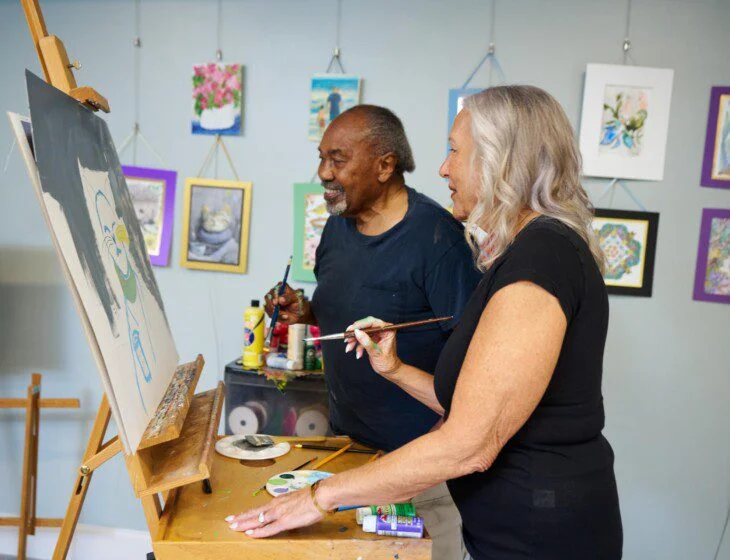
Researchers who study aging consistently find that two variables predict well-being in older adults better than almost anything else: how physically active people remain, and how socially connected they stay. At Village on the Green in Longwood, Florida, the setting was designed with both in mind.
Eighty acres of lush, landscaped grounds—a former golf course now home to native wildlife, walking paths, open green spaces, and preserved natural surroundings that border state parks—give residents a living environment that draws them outside, into motion, and into each other's company. That daily pull toward the outdoors and toward shared experience is more than a lifestyle amenity. It's a health resource.
The CDC identifies social isolation and loneliness as significant risk factors for dementia, heart disease, stroke, and depression in older adults—while those who maintain consistent, engaged social lives show markedly better outcomes across nearly every health measure. At Village on the Green, the infrastructure for that kind of social life begins with the landscape itself and extends into every shared space, dining venue, and program the community offers.
Key Takeaways:
- Social connection and physical engagement are two of the most well-documented contributors to healthy aging—and Village on the Green is designed to deliver both.
- Consistent, low-pressure social contact built into daily routines is more protective against isolation than occasional large gatherings.
- Village on the Green's 80-acre setting, award-winning care, and a community of curious, purpose-driven residents create daily conditions for a life that is as connected as it is fulfilling.
The Problem That Beautiful Surroundings Alone Cannot Solve
One of the more important nuances in research on aging and social well-being is that a pleasant living environment, on its own, does not protect against isolation. What matters is whether that environment is structured to bring people into regular, repeated contact with one another.
The National Institute on Aging notes that retirement, the loss of a partner, and evolving mobility are among the most common contributors to decreased social engagement for older adults—changes that can reduce daily human contact even for people whose lives otherwise look full from the outside. The structures that once generated connection automatically—careers, neighborhood rhythms, family routines—shift over time, and something deliberate needs to replace them.
Community living is the most direct answer to that need. And at Village on the Green, the community is designed so that the occasions for connection are everywhere: in the landscape, in the dining venues, in the programming calendar, and in the remarkable group of people who have chosen to make this place their home.
When the Setting Becomes a Social Catalyst
At Village on the Green, the grounds do something that most living environments simply cannot: they give residents a daily reason to step outside, slow down, and encounter one another. Walking paths wind through open green spaces and past preserved natural areas where wildlife is a regular presence. Villas and common areas open onto landscaped grounds that make outdoor time feel like a natural extension of home rather than a separate activity to plan for.
That daily time outdoors—and the spontaneous contact it generates with neighbors who are doing the same—delivers exactly what peer-reviewed research identifies as among the most protective forms of social engagement for older adults: consistent, low-intensity contact with familiar people over time. A wave from a neighbor on the path, a conversation that starts in the garden and continues over lunch—these small moments accumulate into something substantial.
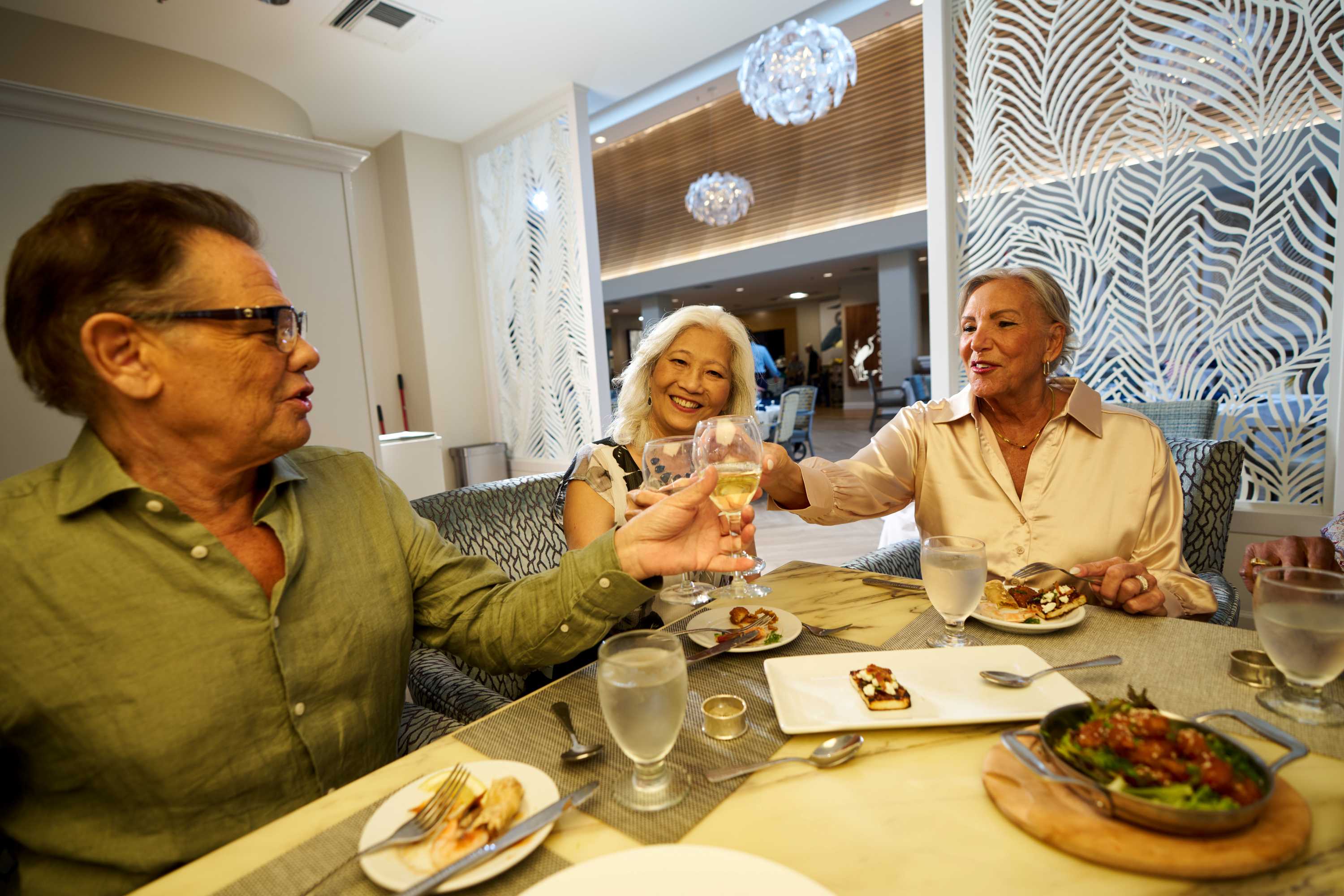
Inside the community, elegantly renovated clubhouses, multiple dining venues, an award-winning health center, and a full calendar of recreational, educational, and social programming extend those opportunities from morning through evening. Chef-prepared meals bring residents together around a table multiple times a day. Lectures, fitness classes, and resident-led programs give people shared experiences worth returning to and talking about.
A Community of Curious, Purpose-Driven People
The social environment at Village on the Green is shaped as much by who lives here as by the spaces they share. Residents tend to be curious, active, and oriented toward a life of continued purpose and discovery—people who approach this stage with energy and bring that same engagement to everything around them. It's a community where conversations go somewhere, where new interests find encouragement, and where the prevailing spirit is one of flourishing rather than simply settling in.
Survey data from U.S. News & World Report reinforces what residents experience every day: people in senior living communities report significantly higher rates of social engagement and overall well-being than older adults living independently at home. At Village on the Green, those numbers are grounded in a daily life that moves from morning walks through open grounds to shared meals, afternoon programs, and evenings spent in the company of people who have become, over time, far more than neighbors.
Find Your People at Village on the Green
Explore life at Village on the Green in Longwood and see what it looks like to live somewhere the grounds invite you outside, the people draw you in, and staying connected is simply part of how every day takes shape. Contact us to schedule a tour or speak with our team.